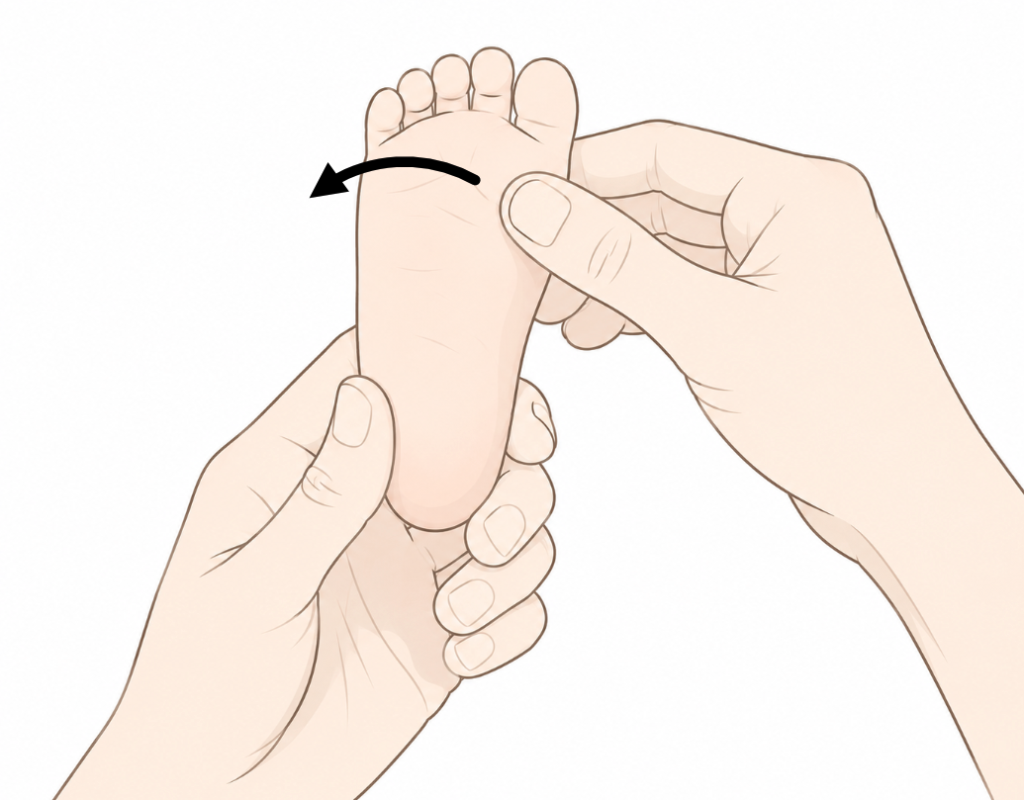
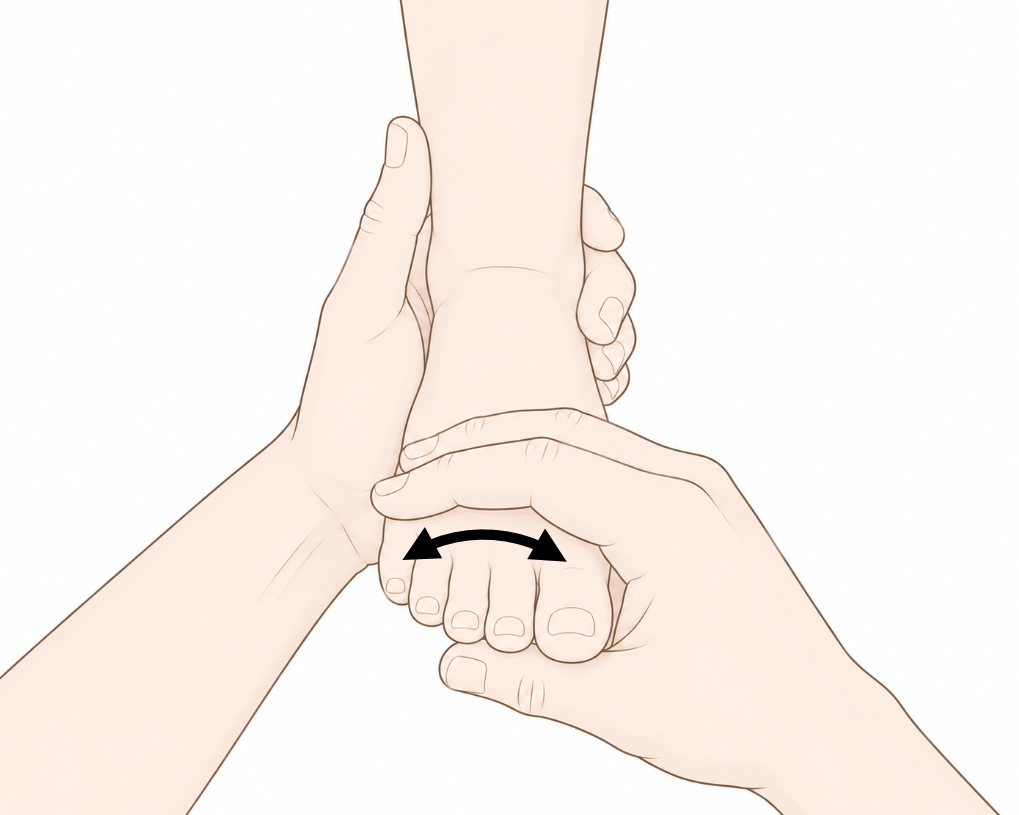
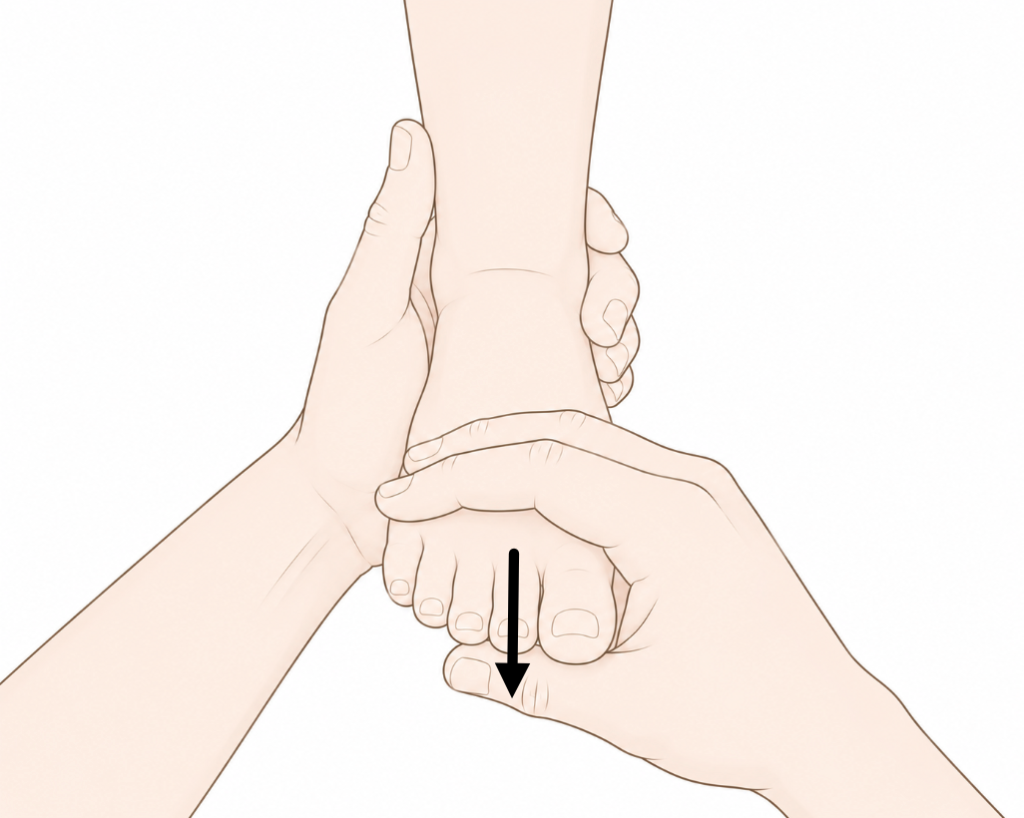
Foot stretches for Metatarsus Adductus
Treatment for metatarsus adductus involves the use of a special boot, combined with frequent stretching
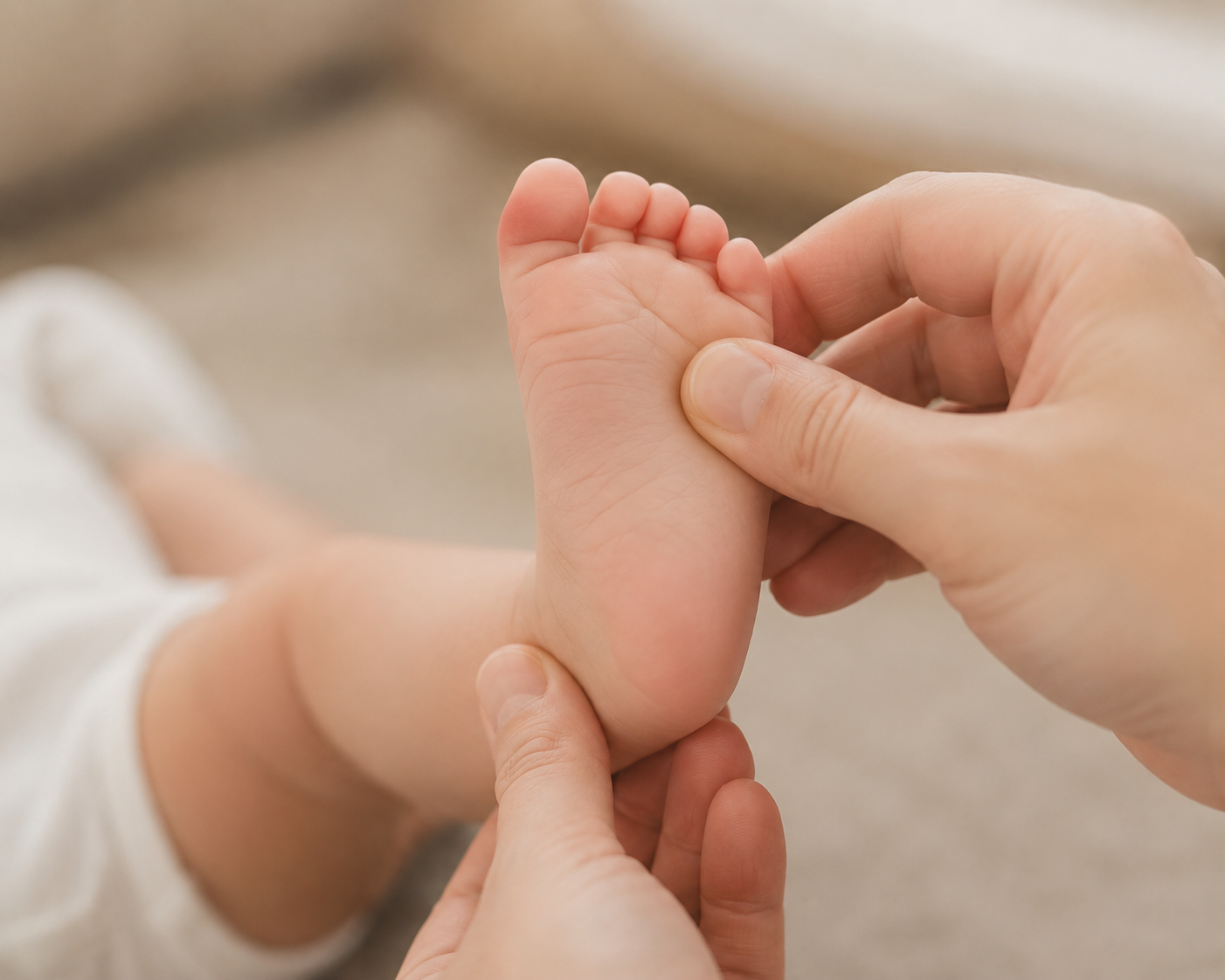
Treatment for metatarsus adductus
Intoeing can sometimes be caused by a foot posture called metatarsus adductus or MTA. This is fairly common and is often due to tightening in a ligament in the inside arch of the foot. Many cases can resolve without treatment, but there are times where treatment can help.
Getting started with the bebax boot and stretching
For pre-walkers and toddlers, use of a special orthotic boot combined with stretches can help to straighten the foot. The boot is called a ‘Bebax’ boot and is designed to support the foot in a straighter position. It’s important to combine use of the boot with stretching of the feet.
Frequently asked questions
If your child hasn’t started walking, the Bebax boot should be worn full-time, except for in the bath. For toddlers, it’s best to wear the boot every night for sleeping.
Ongoing reviews are a part of checking your child’s tolerance and progress. Your orthotist will help to set out your child’s review schedule. Completion of treatment would normally occur following a review appointment and may vary based on a number of circumstances.
Stretching the feet is a critical part of treatment. While the boots help to maintain improvements in foot posture, the stretches create improvements in the flexibility of the feet. It’s unlikely you’ll see improvement without consistent and frequent stretching.
Aim to stretch the feet at every nappy change, or around 6 times per day, for about 2 minutes per side. If you’re only able to stretch less often, be sure to increase the time accordingly.
No, stretching should not be painful for your child.
Naturally, young kids might be resistant to stretching. Consistency and working stretching into a routine can help. Distractions such as books can also be helpful.
Stretching technique
MTA stretches are important to make gains in flexibility and foot shape. Hold the feet fairly firmly and try to stretch the feet quite a bit. Some kids can be a little wriggly when stretches are being done. Remember this isn’t a sign that it’s painful and most kids’ feet are far more flexible than you might expect.